S2-SB1a. La vie du Bouddha Sakyamuni (1/2) - 釈迦牟尼仏の生涯(前編) - The Life of Shakyamuni Buddha (Part One)
popularité : 17%
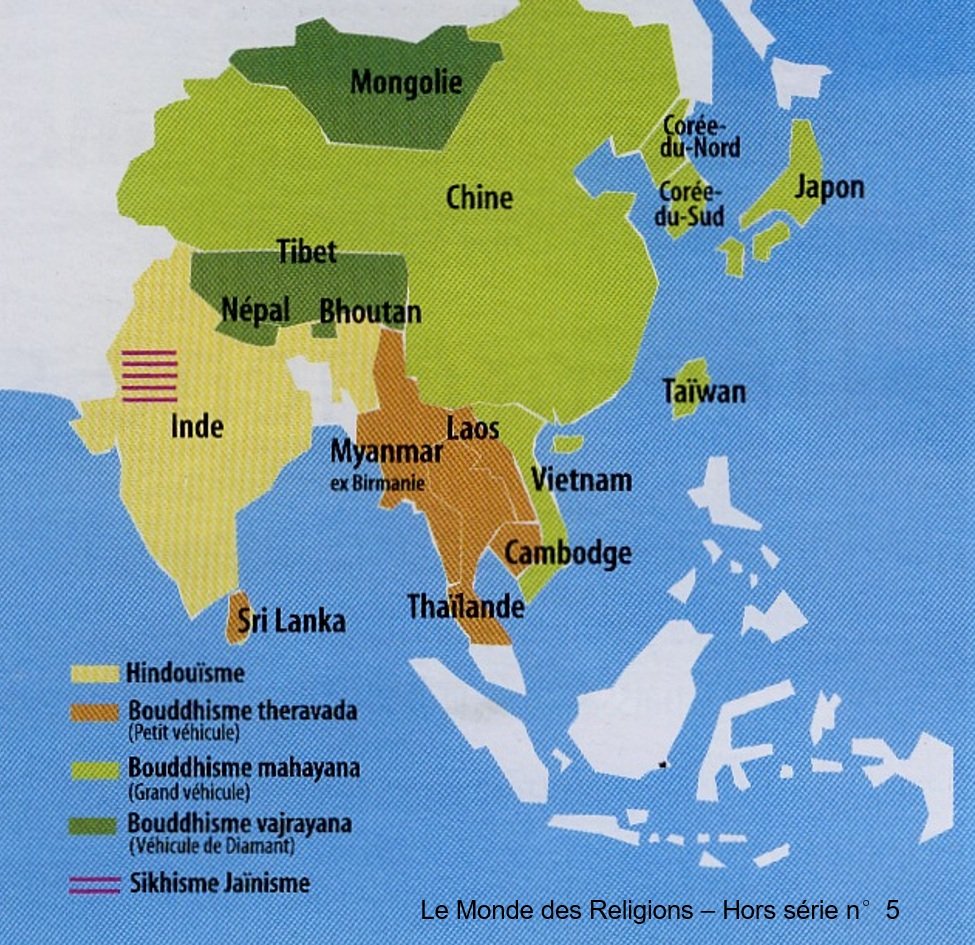
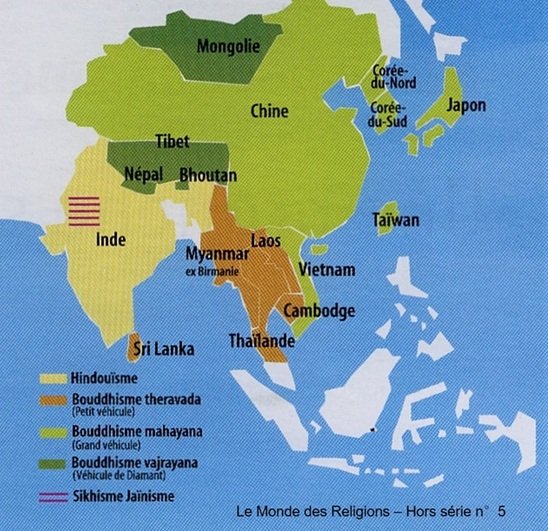
| Texte en français | English Text | 日本語のテキスト |
YouTube Video : https://youtu.be/Ripmg8reQao
Français
Cet article fait partie de "The Big Picture - La grande image - Saison 2"
Vous appréciez la présence du site esperer-isshoni.fr sur le Web : vous pouvez faire un don à la communauté dans laquelle je vis (cliquer ici pour voir comment procéder)
Introduction aux traditions religieuses et spirituelles d’Asie – Le bouddhisme (1/8) [1].
Avertissement. Un geste qui n’est pas anodin
Ce geste de rencontre des autres religions n’est pas anodin et il convient d’être conscient des enjeux de cette rencontre. Une religion est quelque chose d’important sinon d’essentiel pour ses adeptes, aussi ne devons-nous pas nous comporter en touristes désinvoltes en l’abordant avec des idées simplettes et réductrices. La rencontre demande de l’humilité – je n’ai pas dit de l’humiliation. Je crois aussi que ce geste demande d’être au fait de sa propre foi, de ce que l’on croit. Sinon on risque d’être perdu par rapport à des propositions de sens total qui ont leur propre cohérence et qui ne sont pas forcément compatibles entre elles. [2]
La vie du Bouddha Sakyamuni
- Préambule
- a) De la naissance à la sortie de la caste
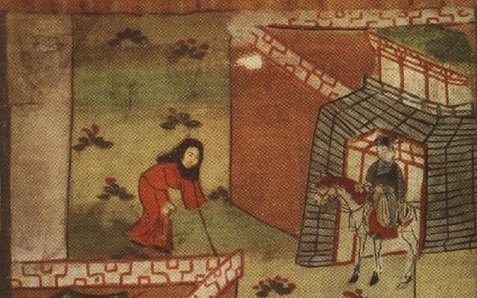
- b) La marche vers l’Éveil
- c) L’Éveil
- Annexe : termes bouddhistes en sanskrit
Préambule
Précision de vocabulaire
1§ Le fondateur de la bouddhologie, le français Eugène Burnouf (1801-1852), a distingué l’adjectif « bouddhiste » pour les personnes et l’adjectif « bouddhique » pour les choses. Nous ne reprenons pas cette distinction sans réelle valeur ajoutée.
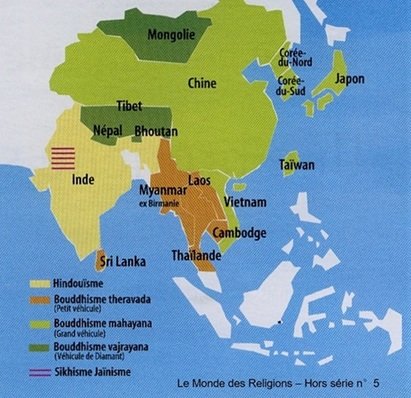
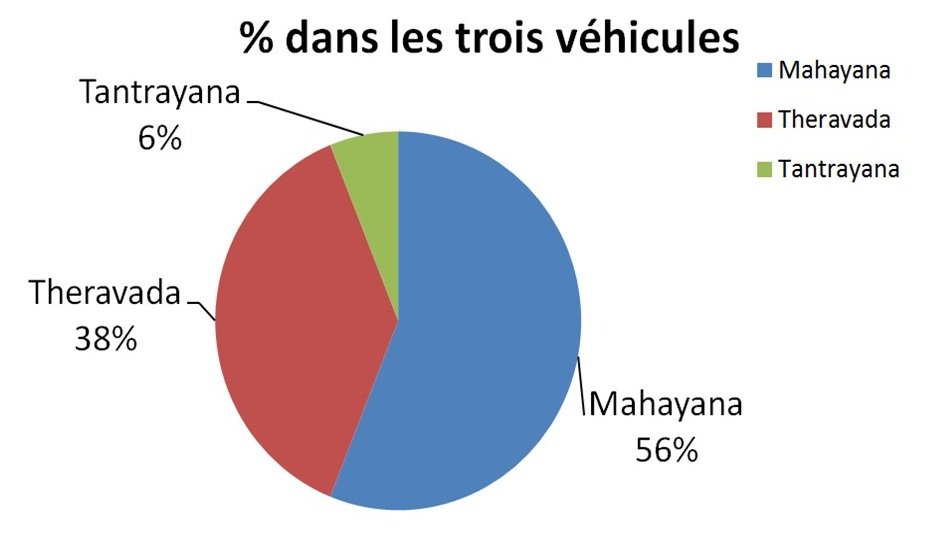
2§ Le bouddhisme est apparu en Inde avant de se répandre en Asie sous la forme de trois grands courants : la Voie des Anciens, le Grand Véhicule et le Véhicule Tantrique.
Le Grand Véhicule représente le courant bouddhiste le plus important en nombre, avec 56 % du nombre total de bouddhistes en Asie. Vient ensuite la Voie des Anciens (38%) suivi du Véhicule Tantrique (6%) [3].
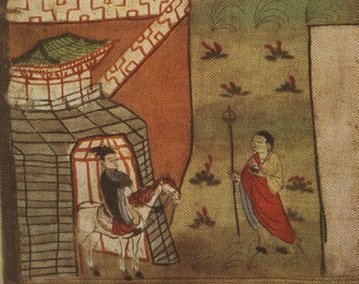
3§ Nous retracerons l’histoire de leur référence commune, le Bouddha Sakyamuni, avant de les étudier successivement.
1. L’histoire fondatrice du Bouddha Sakyamuni
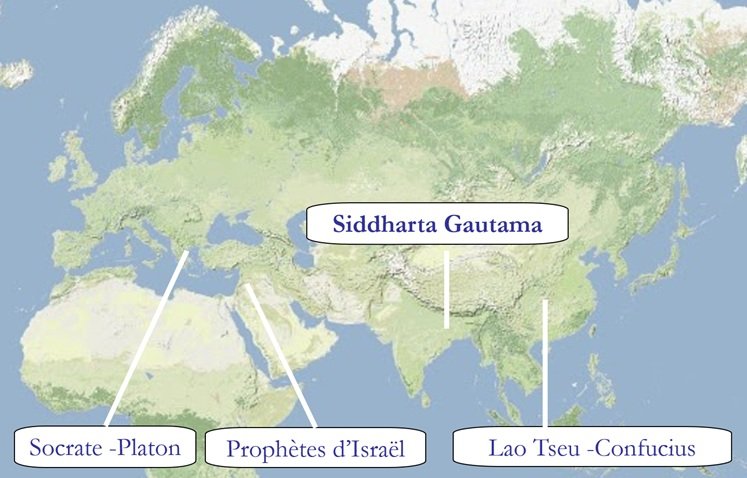
4§ Le bouddhisme est apparu en Inde vers 500 avant Jésus-Christ avec celui qu’on appelle le Bouddha Sakyamuni, littéralement « l’Éveillé Sage-[du-clan]-des-Sakya ».
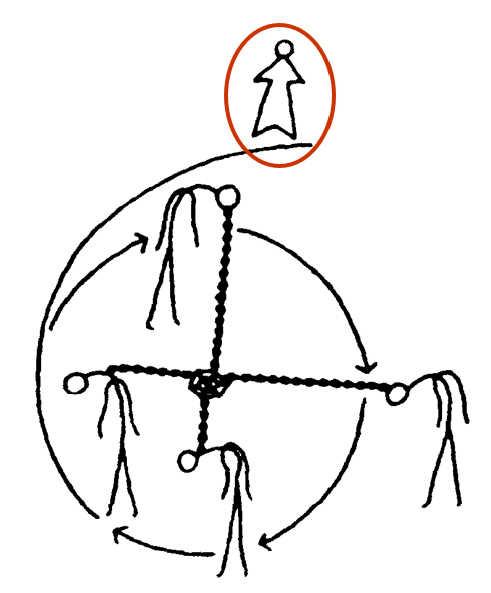
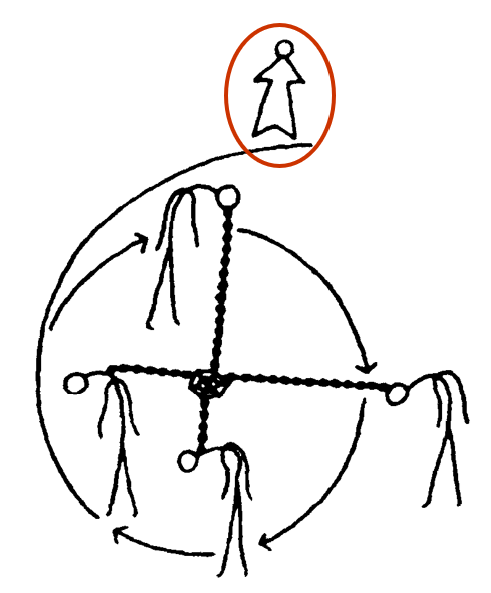
5§ Le Bouddha a apporté une réponse personnelle à la question existentielle qui agitait le brahmanisme : comment libérer l’âme, le Soi, de l’esclavage de la roue des renaissances qui fait renaître sans fin les êtres dans les six destinées : êtres célestes, humains, animaux, esprits affamés, esprits belliqueux, ou condamnés dans les enfers sous terre.
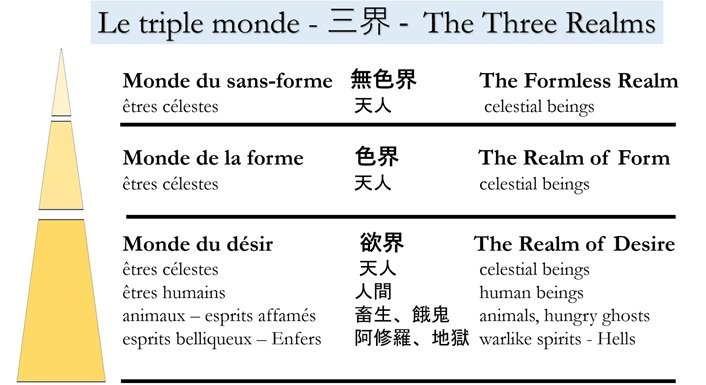
6§ La cosmogonie bouddhiste répartit ces six formes d’existence dans un triple monde :
- le monde du désir où se retrouvent les six destinées, des enfers jusqu’aux domaines célestes ;
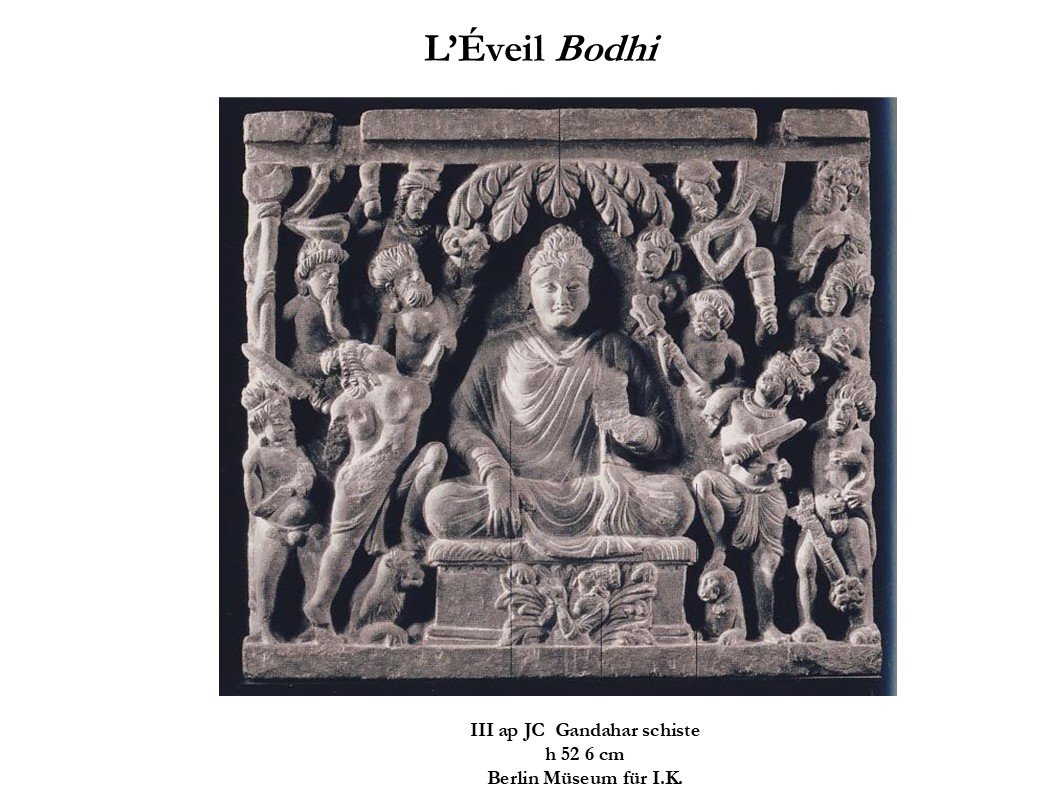
- le monde de la forme, accessible seulement aux êtres célestes, où les êtres sont constitués de matière subtile ;
- le monde sans forme, constitué des états mentaux les plus élevés sans aucun support corporel.
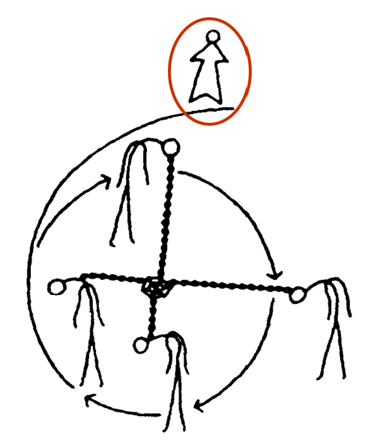
7§ La réponse du Bouddha Sakyamuni sort du cadre de la religiosité classique hindoue, dans la mesure où pour lui il n’y a pas d’âme comme nous allons le voir.
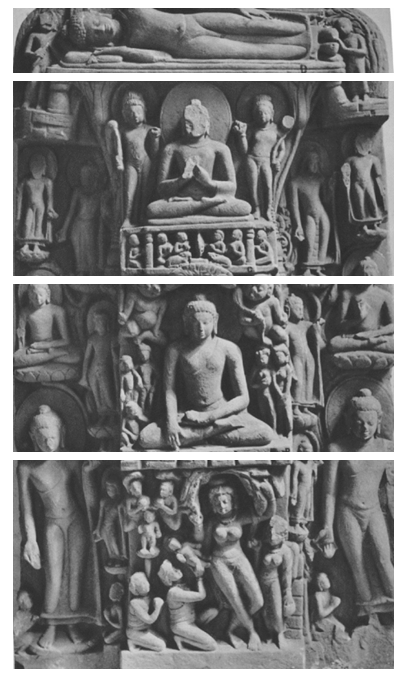
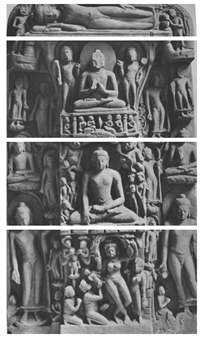
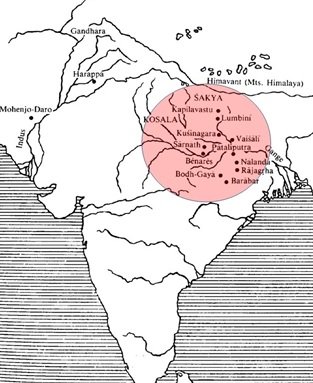
8§ Les bouddhistes racontent la vie du Bouddha Sakyamuni en quatre évènements extraordinaires situés dans le royaume du Maghada, au nord-est de l’Inde :
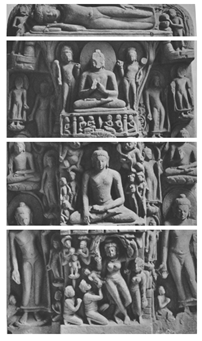
- la naissance à Lumbini ;
- l’Éveil à l’âge de trente-cinq ans à Bodh Gaya ;
- la première prédication au Parc des Gazelles à Sarnath et enfin
- sa mort – son Extinction définitive - à quatre-vingts ans à Kushinagar.
a) De la naissance à la sortie de la caste
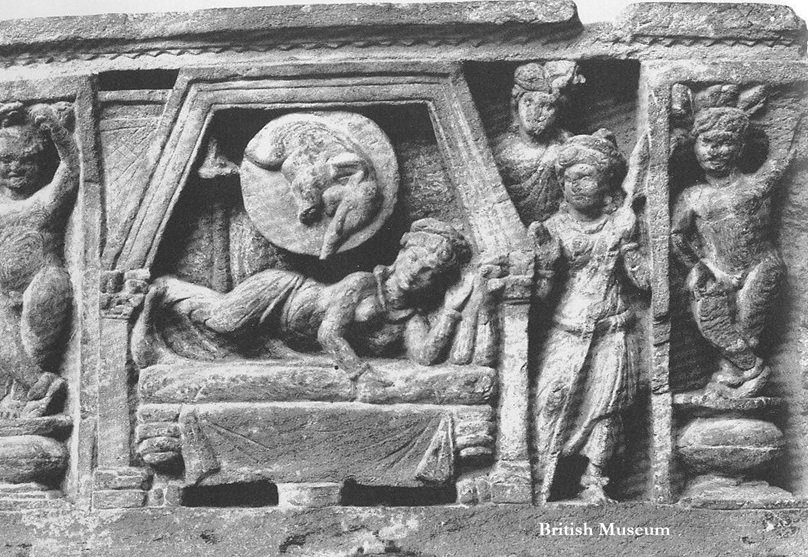
9§ Être céleste dans son avant-dernière existence, le futur Siddharta Gautama choisit de naître dans le clan des Sakya, de la caste des gouvernants : la reine voit en rêve un éléphant lui toucher le flanc de sa trompe et le lendemain elle se retrouve enceinte.
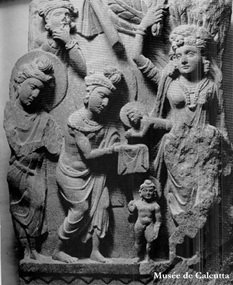
10§ L’accouchement se passe lui aussi de manière extraordinaire : alors qu’elle se promène dans le parc de Lumbini, la reine, fatiguée, s’appuie à la branche d’un arbre. Siddharta sort à ce moment de son flanc ; déposé à terre, il se met à marcher et prononce la phrase suivante : « Ceci est ma dernière existence, je suis né pour le bien des êtres ».
11§ Marié à 15 ans, il engendre un fils nommé Rahula, « entrave », « lien ».
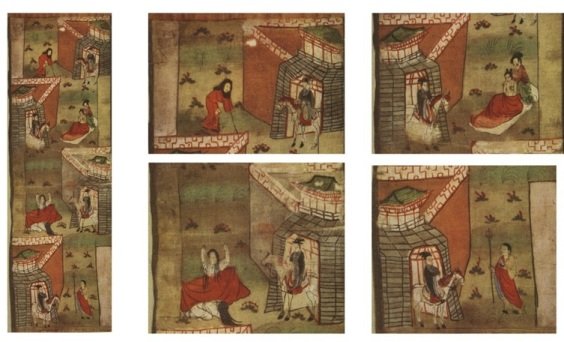
12§ Siddharta mène une vie dorée où lui sont épargnés les spectacles désagréables. Ce cocon confortable se déchirera à la suite de quatre rencontres en dehors du palais.
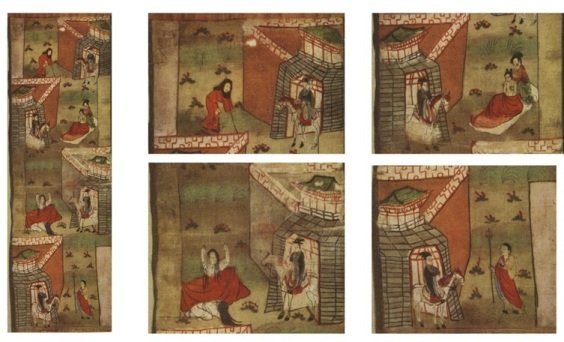
Ce qu’il verra à vingt-neuf ans l’amènera à une rupture décisive.
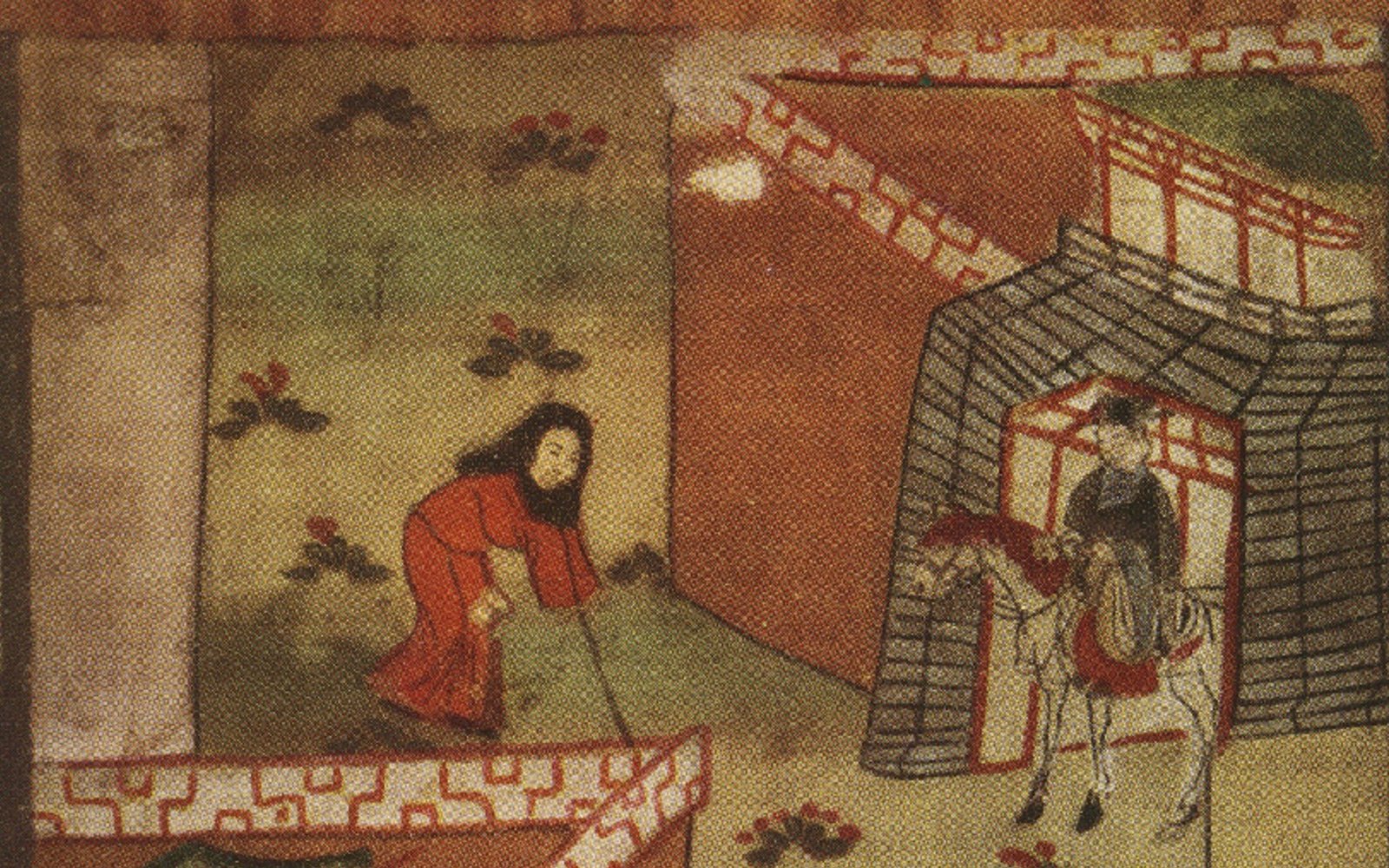
13§ À la première sortie, il rencontre un homme à la démarche hésitante, appuyé sur une canne. Les yeux de cet homme sont ternes, sa peau est grise, ridée, ses cheveux rares sont de couleur grise, de sa bouche édentée coule un filet de salive tandis qu’une goutte de morve pend à son nez. Quand il parle, ses propos manquent de cohérence, ses gestes sont mal assurés et ses mains tremblent.
14§ Siddharta s’inquiète auprès de son cocher : « Qu’a donc cet homme ? ». Et le cocher de répondre : « Ô prince, la force vitale de cet homme est usée, il souffre de la vieillesse ». - Siddharta : « C’est terrible, la vieillesse. Elle concerne seulement cet homme ou d’autres que lui ? ». - Le cocher : « Mais, ô prince, tout ce qui naît doit vieillir, c’est là une loi immuable ».
15§ Siddharta rentre chez lui se coucher sans toucher à son repas : il vient de comprendre que lui aussi vieillira.
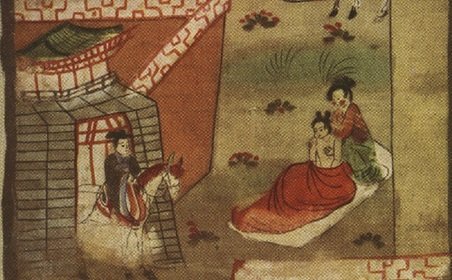
16§ Lors de la deuxième sortie, Siddharta rencontre un malade et il découvre que lui aussi tombera malade un jour. Il passe là encore une mauvaise nuit.
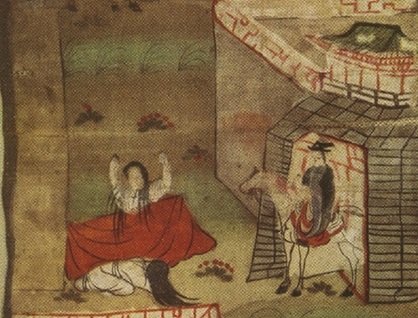
17§ La troisième sortie est encore plus déprimante. Siddharta voit une forme humaine couchée sur le sol, inerte : on la touche, elle ne réagit pas, on lui parle, elle ne répond pas. De ses divers orifices sortent des liquides malodorants, des vers sortent de son corps et des mouches se posent en vrombissant sur lui. Un corbeau s’envole à tire d’aile, tenant un œil dans son bec, tandis qu’un chien s’enfuie avec un morceau de cuisse dans la gueule.
18§ « Mais, qu’est-il arrivé à cet homme ? » s’étonne Siddharta . Le cocher lui répond : « Ô prince, sa force vitale l’a quitté et il est mort ». – Siddharta : « C’est terrible, la mort. Elle concerne seulement cet homme ou d’autres que lui ? ». – Le cocher : « Mais enfin, ô prince, tout ce qui naît doit mourir, c’est là une loi inéluctable ».
19§ Siddharta passe à nouveau une mauvaise nuit car il vient de découvrir que lui aussi mourra.
20§ Les trois rencontres illustrent la première des Quatre nobles vérités : la naissance est douleur, la maladie est douleur, la vieillesse est douleur, la mort est douleur – mais aussi ne pas être avec ceux qu’on aime est douleur, être avec ceux que l’on n’aime pas est douleur, ne pas avoir ce que l’on veut est douleur.
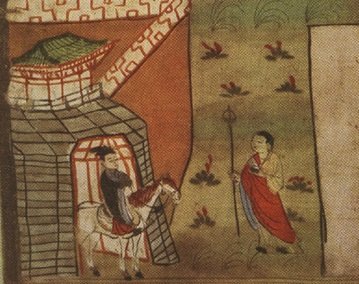
21§ La quatrième sortie s’avère plus heureuse. Siddharta rencontre un religieux mendiant qui le surprend par sa sérénité : cet homme totalement démuni semble ne pas craindre la vieillesse, la maladie et la mort, alors que lui, tout prince qu’il est, passe ses nuits dans l’angoisse.
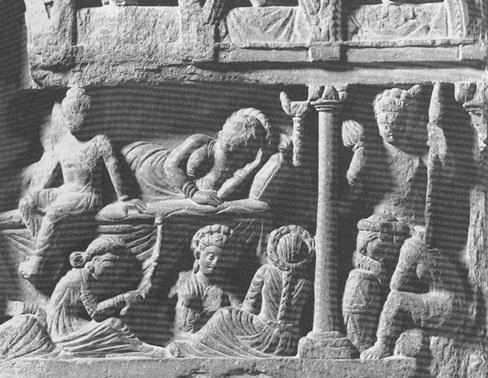
22§ En pleine crise existentielle à vingt-neuf ans, Siddharta décide d’imiter le religieux mendiant en allant sur les routes à la recherche de la Vérité. Quittant subrepticement le palais de nuit, il jette un dernier regard en arrière sur le gynécée endormi : de la bouche entrouverte d’une femme coule un filet de salive, une autre ronfle sans retenue, la jupe d’une autre a glissé, découvrant son sexe, tandis qu’une autre lâche un pet. Face à cette scène, Siddharta a l’impression de voir un champ de cadavres, il est désormais détaché du désir charnel.
23§ Nous avons accumulé à dessein les descriptions peu reluisantes du corps : sans qu’il le sache, le lecteur a pratiqué la méditation bouddhiste de l’« horrible » [4] : il s’agit de visualiser le corps comme un sac ouvert aux deux bouts et rempli d’ordures : peau, poils, dents, os, urine, excréments, morve, salive, bile, sucs gastriques.
b) La marche vers l’Éveil
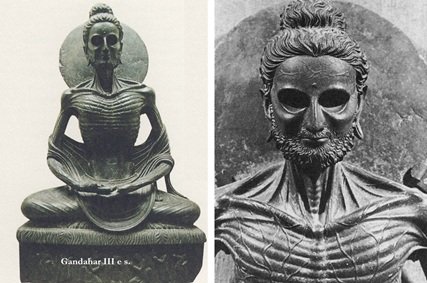
24§ Siddharta ne trouve sur sa route aucun guide spirituel qui réponde à son attente. Se mettant à son compte, Siddharta entreprend une ascèse rigoureuse au point qu’il rencontre sa colonne vertébrale quand il pose la main sur son ventre. Alors qu’il est sur le point de mourir de faim, il se rend compte qu’il n’a pas réussi à se libérer du cycle des renaissances malgré son ascèse. Par chance, une jeune fille qui passait par là le sauve de la mort en lui offrant de la nourriture.
25§ Siddharta déduira de cette expérience qu’il faut gérer son corps comme une corde de luth : ni trop le tendre sinon il casse, ni trop le détendre sinon il perd son ressort. Le bouddhisme appelle cette recherche permanente de l’équilibre la « voie du milieu » [5].
26§ Revigoré, Siddharta s’assoit en méditation sous un arbre.
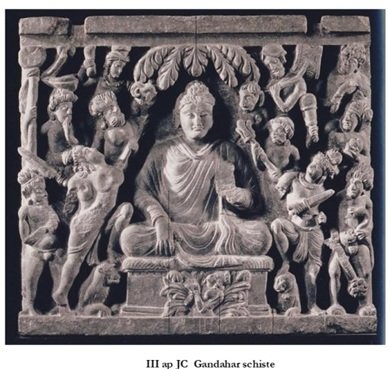
27§ Le roi de l’illusion, Mara, craignant pour son empire, survient alors pour l’en déloger. Il lance ses soldats sur Siddharta, mais leurs flèches et leurs lances se transforment en fleurs. Mara envoie alors ses courtisanes distraire Siddharta de sa méditation. « Viens t’amuser avec nous », chantent-elles en dansant autour de lui, mais il reste impassible tandis que leur corps se flétrit au fur et à mesure qu’elles tournent autour de lui.
28§ Mara affronte alors personnellement Siddharta : « Ôte-toi de dessous cet arbre, car la place me revient », affirme-t-il. Et ses subalternes de renchérir.
29§ Siddharta se trouve en mauvaise posture : qui va témoigner en sa faveur ? Surgit soudain de terre un personnage féminin qui prend le parti de Siddharta . Joignant le geste à la parole, le personnage tord son chignon d’où sort un fleuve d’eau qui emporte Mara et sa suite [6].
c) L’Éveil
30§ Plus rien ne s’oppose à la progression de Siddharta et, une certaine nuit, à 35 ans, il réalise l’Éveil, devenant ainsi le Bouddha Sakyamuni, l’ « Éveillé Sage-des-Sakya » [7].
31§ L’Éveil s’est produit à la troisième veille de la nuit. Pendant la première veille, Siddharta s’est remémoré l’enchaînement de ses vies antérieures ; pendant la seconde veille, il a étendu ce savoir extraordinaire à tous les êtres, autrement dit il a maîtrisé les arcanes de la loi de l’acte, du karma. Pour autant, ces savoirs extraordinaires ne le constituaient pas encore en Bouddha.
32§ C’est seulement lors de la troisième veille qu’il réalise l’Extinction, le Nirvana, en déracinant le « triple poison du mental » et qu’il devient un Bouddha, un Éveillé.
Annexe : termes bouddhistes en sanskrit
acte : karma
Ainsi venu / ainsi allé : Tathagata
âme : atman
Bienheureux : Baghavad
cycle des renaissances : samsara
douleur : dukkha
esprit affamé : Preta
esprit belliqueux : Asura
Éveil : Bodhi
Éveillé : Bouddha
Extinction : Nirvana
Extinction complète : Parinirvana
Grand Véhicule : Mahayana
Monde de la forme : Rupadhatu
Monde du désir : Kamadhatu
Monde sans forme : Arupadhatu
Vainqueur : Jina
Voie des Anciens : Theravada
Véhicule Tantrique : Tantrayana
© fr. Franck Guyen op, février 2022
© fr. Franck Guyen op, août 2026
English
This article is part of the following series : "The Big Picture - La grande image - Season 2"
If you appreciate the esperer-isshoni.fr website on the web : you can make a donation to the community in which I live (click here to find out how)
Introduction to the religious and spiritual traditions of Asia : Buddhism (1/8) [8]
Warning. A gesture that is by no means insignificant
This gesture of engagement with other religions is by no means insignificant, and we must be aware of the implications of such an encounter.
A religion is something important, if not essential, to its followers ; therefore, we must not behave like casual tourists by approaching it with simplistic and reductive ideas. Such an encounter calls for humility – I did not say humiliation.
I also believe that this act requires us to be clear about our own faith, about what we believe. Otherwise, we risk being bewildered by proposals offering a complete system of meaning, each with its own internal coherence, which are not necessarily compatible with one another. [9]
The Life of Shakyamuni Buddha
- Preamble
- a) From birth to leaving his caste
- b) The journey towards Enlightenment
- c) The Enlightenment
- Appendix : Buddhist terms in Sanskrit
Preamble
Vocabulary clarification
1§ The founder of Buddhist studies, the Frenchman Eugène Burnouf (1801–1852), distinguished between the adjective ‘Buddhist’, reserved for people, and the adjective ‘Buddhic’ ’, which refers to things. We do not adopt this cumbersome distinction, which offers no real added value.
Preamble
2§ Buddhism originated in India before spreading throughout Asia in the form of three major traditions : the Ancient Path, the Great Vehicle and the Tantric Vehicle.
The Mahayana is the largest Buddhist tradition in terms of numbers, accounting for 56 per cent of the total number of Buddhists in Asia. Next comes the Theravada (38 per cent), followed by the Vajrayana (6 per cent ) [10].
3§ We shall trace the history of their common figure, the Buddha Sakyamuni, before examining them in turn.
1. The Founding Story of Sakyamuni Buddha
4§ Buddhism emerged in India around 500 BC with the figure known as Sakyamuni Buddha, literally ‘the Enlightened Sage -[of-the-Sakya-clan]-”.
5§ He offered a personal answer to the existential question that preoccupied Brahmanism : how to liberate the soul, the Self, from the bondage of the wheel of rebirth, which causes beings to be reborn endlessly in the six realms : celestial beings, humans, animals, hungry ghosts, war-like spirits, or those condemned to the underworld.
6§ Buddhist cosmogony divides these six forms of existence into a threefold world :
- the world of desire, which encompasses the six realms, from the underworlds up to the heavenly realms ;
- the world of form, accessible only to celestial beings, where beings are composed of subtle matter ;
- the formless world, consisting of the highest mental states without any physical basis.
7§ Sakyamuni Buddha’s response falls outside the framework of classical Hindu religiosity, in that, for him, there is no soul, as we shall see.
8§ Buddhists recount the life of the Buddha Sakyamuni through four extraordinary events set in the kingdom of Magadha, in northern -east of India :
- his birth in Lumbini ;
- his Enlightenment at the age of thirty-five in Bodh Gaya ;
- his first sermon in the Deer Park at Sarnath ; and finally
- his death – his final Passing – at the age of eighty in Kushinagar.
a From birth to leaving the caste
9§ As a celestial being in his penultimate existence, the future Siddhartha Gautama chose to be born into the Sakya clan, the ruling caste : the queen saw in a dream an elephant touching her side with its trunk, and the next day she found herself pregnant.
10§ The birth itself was also extraordinary : whilst strolling in Lumbini Park, the queen, feeling tired, leaned against the branch of a tree. At that moment, Siddhartha emerged from her side ; set down on the ground, he began to walk and uttered the following words : ‘This is my final existence ; I have been born for the benefit of all beings’.
11§ Married at the age of 15, he fathered a son named Rahula, meaning ‘fetter’ or ‘bond’.
12§ Siddhartha led a life of luxury, spared from unpleasant sights. This comfortable cocoon would be shattered following four encounters outside the palace.
What he saw at the age of twenty-nine would lead him to a decisive break.
13§ On his first outing, he meets a man with a faltering gait, leaning on a cane. The man’s eyes are dull, his skin is grey and wrinkled, his sparse hair is grey ; a trickle of saliva runs from his toothless mouth whilst a drop of snot hangs from his nose. When he speaks, his words lack coherence, his movements are unsteady and his hands tremble.
14§ Siddhartha asks his coachman anxiously : ‘What is the matter with that man ?’ The coachman replies : ‘O Prince, this man’s life force is spent ; he is suffering from old age.’ – Siddhartha : ‘Old age is a terrible thing. Does it affect only this man, or others besides him ?” – The charioteer : “But, O Prince, everything that is born must grow old ; that is an immutable law.”
15§ Siddhartha returns home to bed without touching his meal : he has just realised that he too will grow old.
16§ During his second outing, Siddhartha encounters a sick person and realises that he too will one day fall ill. Once again, he has a restless night.
17§ The third outing is even more depressing. Siddharta sees a human figure lying motionless on the ground : when touched, it does not react ; when spoken to, it does not reply. Foul-smelling fluids ooze from its various orifices, maggots crawl out of its body and flies land on it with a buzzing sound. A crow flies off at full speed, clutching an eye in its beak, whilst a dog runs off with a chunk of thigh in its mouth.
18§ ‘But what has happened to this man ?’ asks Siddhartha in astonishment. The charioteer replies : ‘O Prince, his life force has left him and he is dead.’ – Siddhartha : ‘Death is terrible. Does it affect only this man, or others as well ?’ – The charioteer : ‘But surely, O Prince, everything that is born must die ; that is an inescapable law.’
19§ Siddhartha has another restless night, for he has just realised that he too will die.
20§ These three encounters illustrate the first of the Four Noble Truths : birth is suffering, illness is suffering, old age is suffering, death is suffering – but also, not being with those one loves is suffering, being with those one does not love is suffering, and not having what one wants is suffering.
21§ The fourth outing turns out to be a happier one. Siddhartha meets a mendicant monk whose serenity surprises him : this man, utterly destitute, seems to fear neither old age, illness nor death, whereas he, a prince though he is, spends his nights in anguish.
22§ In the throes of an existential crisis at the age of twenty-nine, Siddhartha decides to follow the example of the mendicant monk by setting out on the road in search of the Truth. Sneaking out of the palace at night, he casts one last glance back at the sleeping harem : a trickle of saliva runs from the half-open mouth of one woman, another snores unabashedly, a third’s skirt has slipped down, exposing her genitals, whilst yet another lets out a fart. Faced with this scene, Siddhartha feels as though he is looking at a field of corpses ; he is now detached from carnal desire.
23§ We have deliberately accumulated these unflattering descriptions of the body : without realising it, the reader has practised the Buddhist meditation on the ‘horrible’ [11] : this involves visualising the body as a sack open at both ends and filled with filth : skin, hair, teeth, bones, urine, excrement, snot, saliva, bile and gastric juices.
b) The Path to Enlightenment
24§ Siddhartha finds no spiritual guide along his path who meets his expectations. Setting out on his own, Siddhartha undertakes such rigorous asceticism that he can feel his spine when he places his hand on his stomach. As he is on the verge of starvation, he realises that, despite his asceticism, he has failed to free himself from the cycle of rebirth. Fortunately, a young girl passing by saves him from death by offering him food.
25§ From this experience, Siddhartha concludes that one must treat one’s body like a lute string : neither too tight, or it will snap ; nor too loose, or it will lose its spring. Buddhism calls this constant search for balance the ‘Middle Way’ [12].
26§ Reinvigorated, Siddhartha sat down to meditate beneath a tree.
27§ Mara, the king of illusion, fearing for his empire, then appears to drive him away. He sends his soldiers against Siddhartha, but their arrows and spears turn into flowers. Mara then sends his courtesans to distract Siddhartha from his meditation. ‘Come and have fun with us ’, they sing as they dance around him, but he remains unmoved whilst their bodies wither away as they circle him.
28§ Mara then confronts Siddhartha personally : ‘Move away from beneath that tree, for that place belongs to me,’ he declares. And his subordinates echo his words.
29§ Siddhartha finds himself in a difficult position : who will speak in his favour ? Suddenly, a female figure emerges from the ground and takes Siddhartha’s side. Backing up her words with action, the figure twists her bun, from which a river of water gushes forth, sweeping away Mara and his retinue [13].
c) The Enlightenment
30§ Nothing now stood in the way of Siddhartha’s progress and, one night, at the age of 35, he attained Enlightenment, thus becoming Sakyamuni Buddha, the ‘Enlightened One, Sage of the Sakyas’ [14].
31§ Enlightenment occurred during the third watch of the night. During the first watch, Siddhartha recalled the sequence of his past lives ; during the second watch, he extended this extraordinary knowledge to all beings ; in other words, he mastered the mysteries of the law of action, of karma. However, this extraordinary knowledge did not yet make him a Buddha.
32§ It was only during the third watch that he attained Extinction, the Nirvana, by uprooting the ‘three poisons of the mind’, and thus became a Buddha, an Awakened One.
Appendix : Buddhist terms in Sanskrit
action : karma
Blessed One : Bhagavad
cycle of rebirths : samsara
Complete extinction : Parinirvana
Conqueror : Jina
Enlightened One : Buddha
Enlightenment : Bodhi
Extinction : Nirvana
Formless world : Arupadhatu
Great Vehicle : Mahayana
hungry ghost : Preta
Path of the Ancients : Theravada
soul : atman
suffering : dukkha
Tantric Vehicle : Tantrayana
Thus Come One / Thus Gone One : Tathagata
warlike spirit : Asura
World of desire : Kamadhatu
World of form : Rupadhatu
© Franck Guyen op, February 2022
© Franck Guyen op, August 2026
日本語
この記事は以下のシリーズの一部です : "The Big Picture - La grande image - シーズン2"
もしウェブ上の esperer-isshoni.fr というウェブサイトを気に入ってくれたなら、私が暮らすコミュニティへ寄付をすることができる([寄付方法はこちら→https://dominicainslille.fr/?page_id=84])
アジアの宗教・精神伝統入門 - 仏教 (1/8) [15]
警告。。決して些細ではない姿勢
他の宗教と関わるというこの姿勢は決して些細なものではなく、我々はそうした出会いがもたらす意味合いを認識しなければならない。
宗教とは、信者にとって不可欠とまではいかなくとも重要なものである。したがって、単純化され、矮小化された考えでそれに接し、まるで気ままな観光客のように振る舞ってはならない。そのような出会いに求められるのは謙虚さだ――屈辱ではない。
また、この行為には、私たち自身の信仰、すなわち私たちが何を信じているのかについて、明確にしておくことが求められると私は考える。そうでなければ、それぞれ独自の内部的整合性を持ち、必ずしも互いに両立するとは限らない、完全な意味体系を提示する提案に、私たちは戸惑ってしまう危険がある。 [16]
釈迦牟尼仏の生涯
序文
用語の明確化
1§ 仏教学の創始者であるフランス人のウジェーヌ・ビュルヌフ (1801–1852)は、人に対して用いられる形容詞「Buddhist」と、物事を指す形容詞「Buddhic」とを区別した。我々は、実質的な付加価値をもたらさないこの煩わしい区別を採用しない。
前文
2§ 仏教はインドで発祥し、その後、「古道」、「大乗」、「密教」という三つの主要な伝統の形でアジア全域に広まった。
大乗仏教は、信者数の点で最大の仏教伝統であり、アジアの仏教徒総数の56パーセントを占めている。次いで上座部仏教(38%)、その後に金剛乗(6%)が続く [17]
3§ これらを個別に検討する前に、両者に共通する人物である釈迦牟尼仏の歴史をたどることにする。
1. 釈迦牟尼仏の開祖伝説
4§ 仏教は紀元前500年頃、インドにおいて、文字通り「[サキャ一族の]菩提 (悟り) を開いた聖者」を意味する釈迦牟尼仏として知られる人物によって誕生した 。
5§ 彼は、バラモン教が深く関心を寄せていた実存的な問い――すなわち、魂、すなわち「自己」を、六道(天界、人間界、畜生界、餓鬼界、阿修羅界、地獄界)において生きとし生けるものが果てしなく生まれ変わらざるを得ない「輪廻の輪」の束縛からいかに解き放つか――に対して、独自の答えを示した。
6§ 仏教の宇宙生成論では、これら六つの存在形態を三つの世界に分けている:
- 欲界。これは、地獄から天界に至る六道を含む;
- 色界。天界の住みかであり、存在は微細な物質で構成されている;
- 無色界。これは、いかなる物質的基盤も持たない、最も高次の精神状態から成る。
7§ 釈迦牟尼仏の答えは、古典的なヒンドゥー教の宗教観の枠組みからは外れている。彼にとって、魂など存在しないからだ。これについては後で見ることになる。
8§ 仏教徒は、インド北東部のマガダ王国を舞台とした四つの非凡な出来事を通じて、釈迦牟尼仏の生涯を語る。
- ルンビニでの誕生;
- 35歳の時にブッダガヤで菩提 (悟り) を開いたこと;
- サルナートの鹿野苑での最初の説法;そして最後に
- クシナガルでの80歳での死――入滅――。
9§ 最後から二番目の生において天界の住人であった、後のシッダールタ・ゴータマは、支配階級であるサキャ族に生まれることを選んだ。王妃は夢の中で、象が鼻で自分の脇腹に触れるのを見、翌日、妊娠していることに気づいた。
10§ 誕生そのものもまた並外れたものであった。ルンビニ公園を散策中、王妃は疲れを感じ、木の枝にもたれかかった。その瞬間、シッダールタは彼女の脇腹から現れ、地面に下ろされると歩き出し、次のように語った。「これが私の最後の生である。私はすべての衆生の利益のために生まれたのだ」。
11§ 15歳で結婚し、「束縛」や「絆」を意味するラーフラという名の息子をもうけた。
12§ シッダールタは、不快な光景から隔てられた贅沢な生活を送っていた。この安楽な繭は、宮殿の外での4つの出会いを経て打ち砕かれることになる。
29歳の時に目にした光景が、彼を決定的な転機へと導くことになる。
13§ 初めての外出の際、彼は杖に寄りかかり、よろめくように歩く男に出会う。その男の目はくすみ、肌は灰色でしわだらけ、まばらな髪は白髪交じりだ。歯のない口からはよだれが垂れ、鼻からは鼻水がぶら下がっている。彼が話すとき、言葉は支離滅裂で、動きはふらつき、手は震えていた。
14§ シッダールタは心配そうに御者に尋ねた。「あの男はどうしたのだ?」 御者は答えた。「お王子よ、この男の生命力は尽き果てている。彼は老いに苦しんでいるのだ。」 – シッダールタ:「老いとは恐ろしいものだ。この男だけに起こるものなのか、それとも彼以外にも起こるのか?」 – 御者:「しかし、王子よ、生まれたものはすべて老いるものだ。それは不変の法則である。」
15§ シッダールタは食事に手をつけずに家に戻り、寝床についた。彼もまた、いつか老いるのだと悟ったばかりだった。
16§ 二度目の外出の際、シッダールタは病人に遭遇し、自分もいつかは病に倒れるのだと悟る。再び、彼は安らかな夜を過ごせなかった。
17§ 三度目の外出はさらに憂鬱なものだった。シッダールタは、地面に動かずに横たわっている人影を目にした。触れても反応せず、話しかけても返事はない。体中の穴からは悪臭を放つ液体が滲み出し、蛆が体から這い出し、ハエがブーンという音を立ててその上に群がっていた。一羽のカラスが、くちばしに眼球をくわえて全速力で飛び去り、一方、一匹の犬が太ももの肉片を口にくわえて走り去った。
18§「しかし、この男に一体何が起きたのだ?」とシッダールタは驚いて尋ねた。御者は答えた。「お王子よ、彼の生命力は去り、彼は死んだのだ。」 – シッダールタ:「死とは恐ろしいものだ。これはこの男だけに起こるのか、それとも他の人々にも起こるのか?」 – 御者:「しかし、王子よ、生まれたものはすべて死なねばならない。それは避けられない法則なのだ。」
19§ シッダールタはまたも安らかな夜を過ごせなかった。自分もいずれ死ぬのだと悟ったばかりだったからだ。
20§ これら三つの出会いは、四聖諦の第一を如実に示している。すなわち、生は苦であり、病は苦であり、老いは苦であり、死は苦である――しかし同時に、愛する者と離れることも苦であり、愛さない者と共にあることも苦であり、望むものを得られないことも苦である。
21§ 四度目の外出は、より幸せなものであった。シッダールタは、その穏やかさに驚かされる托鉢僧に出会う。この男は、全くの無一文でありながら、老いも病も死も恐れていないように見える。一方、王子である彼は、夜ごとに苦悩に苛まれているのだ。
22§ 29歳の時に存在の危機に直面したシッダールタは、その托鉢僧の例に倣い、真理を求めて旅に出ることを決意した。夜、宮殿からこっそりと抜け出す際、彼は眠る後宮の女たちを最後にもう一度振り返った。ある女は半開きの口からよだれを垂らし、別の女は恥じらいもなくいびきをかき、三番目の女はスカートがずり落ちて性器を露わにし、さらに別の女は屁をこいていた。この光景を目の当たりにし、シッダールタはまるで死体の山を見ているかのような気分になった。彼は今や、肉欲から解き放たれていた。
23§ 我々は意図的に、身体に関するこうした好ましくない描写を積み重ねてきた。読者は気づかぬうちに、仏教の「恐ろしいもの」への瞑想 [18]を実践してきたのだ。これは、身体を両端が開いた袋として視覚化し、その中に皮膚、髪、歯、骨、尿、排泄物、鼻水、唾液、胆汁、胃液といった不浄物が満たされていると想像するものである。
b) 菩提 (悟り) への道
24§ シッダールタは、その道のりで自分の期待に応える精神的指導者を見つけられなかった。独りで旅立ったシッダールタは、腹に手を当てると背骨が感じられるほど過酷な苦行に身を投じた。飢餓の瀬戸際に立たされたとき、彼は、苦行にもかかわらず、輪廻の連鎖から自らを解き放つことに失敗していたことに気づく。幸い、通りかかった一人の少女が彼に食べ物を与え、死の淵から救った。
25§ この経験から、シッダールタは、自分の体をリュートの弦のように扱わなければならないと結論づけた。張りすぎれば切れてしまうし、緩すぎれば弾力を失ってしまうからだ。仏教では、この絶え間ない均衡の探求を「中道」と呼ぶ [19]。
26§ 活力を取り戻したシッダールタは、木の下に座って瞑想を始めた。
27§ 幻想の王マーラは、自らの帝国を危惧し、シッダールタを追い払おうと現れた。マーラは兵士たちをシッダールタに送り込んだが、彼らの矢や槍は花へと変わった。そこでマーラは、シッダールタの瞑想の気をそらすために遊女たちを送り込んだ。「さあ、私たちと一緒に楽しもう」と、彼女たちは彼の周りを踊りながら歌ったが、彼は動じることなく、彼女たちが彼の周りを回るうちに、その体は枯れていった。
28§ そこでマーラは自らシッダールタに立ち向かう。「その木の下から離れよ。その場所は私のものだ」と彼は宣言する。そして部下たちもその言葉を繰り返す。
29§ シッダールタは困難な立場に立たされる。誰が彼を擁護してくれるのだろうか。すると突然、一人の女性の姿が地面から現れ、シッダールタの味方についた。その女性は言葉だけでなく行動でもそれを裏付け、髷をねじると、そこから水の川が噴き出し、マーラとその随員を洗い流した [20]
c) 菩提 (悟り)
30§ もはやシッダールタの歩みを阻むものは何もなく、35歳のある夜、彼は菩提 (悟り) を開き、こうして「菩提 (悟り) を開いた者、サカ族の賢者」である釈迦牟尼仏となった [21].
31§ 菩提 (悟り) は夜の第三更の間に訪れた。第一更の間、シッダールタは自身の過去生の経緯を思い起こし、第二更の間、この非凡な知見をすべての衆生へと広げた。言い換えれば、彼は業の法則、すなわちカルマの奥義を極めたのである。しかし、この非凡な知見だけでは、まだ彼を仏にはしなかった。
32§ 第三の更の間に初めて、彼は「心の三毒」を根絶することで、涅槃、すなわち「滅」を成就し、こうして仏、すなわち覚者となった。
© フランク・ギエン op、2022年2月
© フランク・ギエン op、2026年8月
[1] Les articles synthétisent un cours de 24h dispensé sur un an à la Faculté de théologie de Lille. Nous avons assuré ce cours de 2010 à 2023
[3] Ces chiffres reposent sur des estimations établies à partir de sources hétérogènes. Il convient de les prendre comme des ordres de grandeur
[4] L’hindouisme connaît aussi la méditation de l’horrible
[5] La voie du milieu bouddhiste désapprouve les mortifications des ascèses hindoues. Noter cependant l’existence de pratiques extrêmes du Grand Véhicule comme de se brûler un doigt (cf. plus bas)
[6] En Inde, après avoir fait une offrande aux divinités, on verse de l’eau au sol afin de prendre la terre à témoin : la divinité de la terre déverse ici l’eau des offrandes innombrables de Siddharta pendant ses vies antérieures, et qui lui donnent le droit d’être assis sous l’arbre de l’Éveil.
L’Asie du Sud-Est bouddhiste représente souvent cet épisode de la vie de Siddhartha sous forme de statues où il se tient assis en position du lotus, avec la paume de la main droite tournée vers le sol tandis que la main gauche repose sur son giron, paume vers le haut Ce geste codifié s’appelle « la prise de terre à témoin ».
[7] Les bouddhistes donnent d’autres titres de gloire à l’Éveillé : il est le Vainqueur [du cycle des renaissances et de Mara], l’Ainsi-venu [vers ce monde-ci pour lui annoncer la libération] ou l’Ainsi-allé [vers les rives du Nirvana], le Bienheureux
[8] These articles summarise a 24-hour course taught over the course of a year at the Faculty of Theology in Lille. We have been teaching this course for around ten years.
[9] View the text Engaging with Asian religions : my statement of intent
[10] These figures are based on estimates drawn from a variety of sources. They should be regarded as rough orders of magnitude
[11] Hinduism also recognises the meditation on the horrible
[12] The Buddhist Middle Way disapproves of the self-mortification practised by Hindu ascetics. Note, however, the existence of extreme practices within the Mahayana tradition, such as burning one’s finger (see below)
[13] In India, after making an offering to the deities, water is poured onto the ground to call the earth to witness : here, the earth deity pours out the water from the made by Siddhartha during his previous lives, and which grant him the right to sit beneath the Tree of Enlightenment.
Buddhist Southeast Asia often depicts this episode in Siddhartha’s life in the form of statues in which he is seated in the lotus position, with the palm of his right hand facing the ground whilst his left hand rests on his lap, palm upwards. This codified gesture is called ‘calling the earth to witness’.
[14] Buddhists bestow other honourable titles upon the Awakened One : he is the Conqueror [of the cycle of rebirths and of Mara], the Thus-Come One [who has come to this world to proclaim liberation] or the Thus-Gone One [who has gone to the shores of Nirvana], the Blessed One
[15] これらの記事は、リールの神学部で1年間にわたり開講された24時間の講座をまとめたものである。当講座は約10年にわたり開講されている。
[16] アジアの宗教との関わり:私の意向表明 を見る]
[17] これらの数値は様々な情報源に基づく推定値である。あくまで大まかな規模の目安として捉えるべきである
[18] ヒンドゥー教もまた、恐ろしいものへの瞑想を認めている
[19] 仏教の中道は、ヒンドゥー教の苦行者たちが実践する自己懲罰を是認しない。ただし、大乗仏教の伝統の中には、指を焼くといった極端な修行が存在することには留意すべきだ(後述参照)
[20] インドでは、神々に供物を捧げた後、大地を証人とするために地面に水を注ぐ習慣がある: ここでは、大地の神が、シッダールタが前世で行った功徳から生じた水を注ぎ出し、それによって彼に菩提 (悟り) の木の下に座る権利が与えられるのだ。
仏教圏の東南アジアでは、シッダールタの生涯におけるこのエピソードを、彼が蓮華座を組んで座り、右手のひらを地面に向け、左手はひざの上に手のひらを上にして置いている姿の仏像として描くことが多い。この定型化された仕草は「大地を証人とする」と呼ばれる。
[21] 仏教徒は、この「覚者」に他にも尊い称号を授けている。すなわち、彼は(輪廻とマーラの)征服者、解脱を説くためにこの世に現れた「如来」、あるいは涅槃の岸へと去った「如来」、そして「世尊」である
Portfolio