S2-SB3a. Le Grand véhicule (Mahayana) - 大乗 - The Great Vehicle (Mahayana)
popularité : 20%
| Texte en français | English Text | 日本語のテキスト |
YouTube Video : https://youtu.be/Ng1KbE0eUC4
Français
Cet article fait partie de "The Big Picture - La grande image - Saison 2"
YouTube Video : https://youtu.be/Ng1KbE0eUC4
Vous appréciez la présence du site esperer-isshoni.fr sur le Web : vous pouvez faire un don à la communauté dans laquelle je vis (cliquer ici pour voir comment procéder)
Introduction aux traditions religieuses et spirituelles d’Asie – Le bouddhisme (4/8) [1].
Avertissement. Un geste qui n’est pas anodin
Ce geste de rencontre des autres religions n’est pas anodin et il convient d’être conscient des enjeux de cette rencontre. Une religion est quelque chose d’important sinon d’essentiel pour ses adeptes, aussi ne devons-nous pas nous comporter en touristes désinvoltes en l’abordant avec des idées simplettes et réductrices. La rencontre demande de l’humilité – je n’ai pas dit de l’humiliation. Je crois aussi que ce geste demande d’être au fait de sa propre foi, de ce que l’on croit. Sinon on risque d’être perdu par rapport à des propositions de sens total qui ont leur propre cohérence et qui ne sont pas forcément compatibles entre elles. [2]
3. Le Grand Véhicule (Mahayana)
I. Histoire du Grand Véhicule
I. Histoire du Grand Véhicule
77§ Le Grand Véhicule est apparu en Inde un peu avant l’ère chrétienne. Il a emprunté les routes de la soie pour atteindre l’aire culturelle chinoise, Chine, Corée, Vietnam et Japon.
78§ L’obstacle de la langue indienne a été franchi grâce à des traducteurs tels Kumarajiva (344-413) ou Amoghavajra (705-774). Les premiers traducteurs utilisèrent des termes taoïstes avant de se rendre compte de la spécificité bouddhiste. La Chine apprit aussi à distinguer entre la Voie des Anciens et le Grand Véhicule pour lequel elle opta finalement.
79§ La Chine a conservé la mémoire des pèlerins Fa Xiang (337-422) et Xuang Tang (602 – 664) qui revinrent chargés d’écrits bouddhistes. Le premier, parti de Chine en 399, y revint en 414 après avoir atteint l’Inde par la route de la Soie et en être revenu par la mer. Le second utilisa uniquement la voie terrestre pour son pèlerinage de 629 à 645.
80§ Le Grand Véhicule considère qu’il a recueilli l’enseignement ultime du Bouddha réservé aux êtres les plus avancés sur le plan spirituel. Le Bouddha Sakyamuni l’a dispensé lors de la Seconde mise en mouvement de la roue de la Loi sur le Pic du Vautour (Gridhrakûta) près de la ville de Rajagriha. Le Grand Véhicule a recueilli cet enseignement dans ce qu’il appelle les « sutras développés », pour les distinguer des « sutras » de la Voie des Anciens.
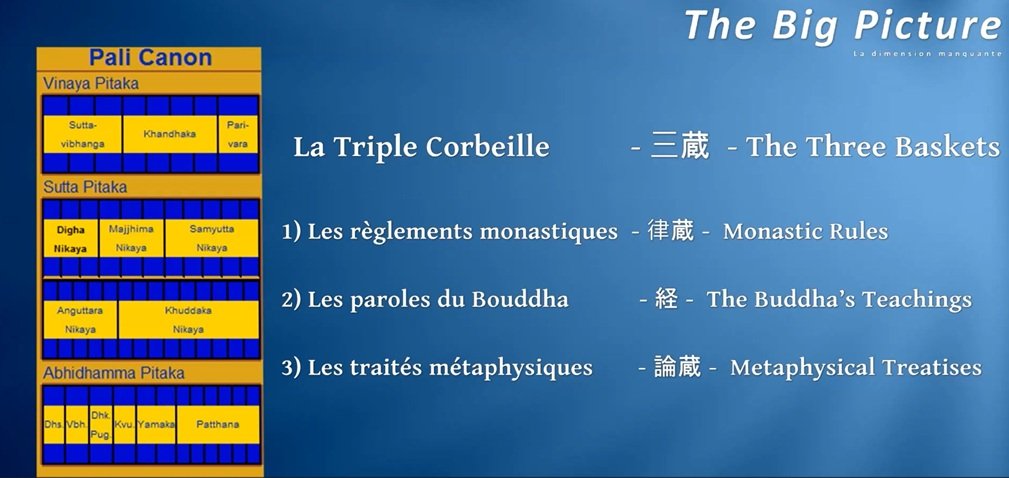
81§ D’après le Sutra du Lotus de la Loi sublime (en abrégé, le Sutra du Lotus), l’un de ces « sutras développés », les adeptes de la Voie des Anciens ont préféré quitter l’assemblée plutôt que d’entendre un nouvel exposé de la Loi qui remettait en question la Triple Corbeille.
82§ Fort d’enseignements qu’il estime supérieurs, le Grand Véhicule qualifie péjorativement de « Petit Véhicule » la Voie des Anciens. Il se dit « Grand Véhicule » parce qu’il proposerait un idéal plus soucieux du salut des autres [3], en particulier des laïcs qui n’auraient plus besoin de devenir moines pour être sauvés [4].
83§ Les différentes tendances du Grand Véhicule valorisent leurs propres « sutra développés » associés à des Bouddhas spécifiques, Sakyamuni mais aussi Amitabha ou Vairocana. Outre le Sutra du Lotus déjà mentionné, on citera les Trois sutras de la Terre Pure (du Bouddha Amida).
84§ Le canon bouddhiste chinois s’est accru au fil des siècles jusqu’à constituer une bibliothèque conséquente : la compilation japonaise de référence, le Taishô zô, réalisée de 1924 à 1935, rassemble cent volumes regroupant 2 920 ouvrages pour un total de 80 645 pages.
1. Une école bouddhiste proprement chinoise
85§ La greffe bouddhiste a produit une école proprement chinoise, le chan, plus connu sous son nom japonais du zen [5]. D’après des sinologues, elle contiendrait des influences taoïstes. Cette école est censée avoir été diffusée par le patriarche indien Bodhidharma au cinquième siècle de l’ère chrétienne.
86§ À la différence des autres écoles, le zen demandait à ses moines de travailler selon la formule attribuée au moine zen Baizhang (720–814) : « Un jour sans travailler, un jour sans manger ». Les monastères zen sont ainsi devenus moins dépendants des dons des laïcs, ce qui les a sans doute aidés à survivre lors de la grande persécution de 845 déclenchée par l’empereur Wuzong des Tang contre le bouddhisme mais aussi contre les autres religions étrangères, le nestorianisme chrétien et le zoroastrisme perse [6].
87§ Le courant zen a donné naissance à trois écoles :
- l’école Sôto qui privilégie la méditation assise ;
- l’école Rinzai qui utilise en plus les « cas d’école », c’est-à-dire des énigmes insolubles [7]
- l’école Ôbaku qui intègre la dévotion au Bouddha Amida.
2. Vers un bouddhisme dévotionnel : l’école de la Terre Pure du Bouddha Amida
88§ L’école de la Terre Pure a développé en la transformant une pratique du Grand Véhicule appelée la « commémoration du Bouddha ».
89§ Originellement, la commémoration se comprenait comme la visualisation mentale du Bouddha Amida et de l’environnement appelé « Terre Pure » qu’il déploie autour de lui. L’école de la Terre Pure a transformé la commémoration mentale en une pratique vocale basée sur l’invocation sacrée (mantra) : « Hommage au Bouddha Amida ».
90§ L’école de la Terre Pure est devenue populaire au Japon grâce à deux grands penseurs japonais, Hônen ( 1133-1212) et Shinran (1173-1262) . Actuellement encore, les mouvements de la Terre Pure constituent le courant bouddhiste le plus important au Japon.
91§ On peut se demander pourquoi le même terme, « commémoration du Bouddha », qui désignait à l’origine une pratique méditative, est devenue une pratique vocale. Nous y voyons personnellement un effet du concept de la « Fin de la Loi » : l’efficacité de la Loi du Bouddha décroit dans le temps, ce qui fait qu’à un certain moment la pratique de l’enseignement du Bouddha ne peut plus produire la libération, quel que soit l’effort du pratiquant.
92§ Or Hônen croyait avec beaucoup de ses contemporains que la « Fin de la Loi » avait commencé. Hônen se demandait alors comment atteindre la libération. Il a trouvé la réponse chez un moine chinois Shandao (613-681) qui promouvait la dévotion au Bouddha Amida : Amida saisissait ses dévots et il ne les lâchait plus qu’il ne les ait fait renaître dans sa Terre pure.
93§ Cette dévotion s’exprimait par l’invocation du pratiquant qui s’appuyait sur la force du vœu de salut des êtres du Bouddha Amida et non plus sur ses propres forces [8].
3. Le calendrier bouddhiste en Asie sinisée : l’importance des défunts
94§ Le Grand Véhicule fête trois des quatre grands événements du Bouddha Sakyamuni : la naissance lors du quatrième mois lunaire, l’Éveil et la première prédication au douzième mois lunaire.
95§ Le calendrier comporte des fêtes liées aux défunts, qu’ils soient devenus des ancêtres ou que, morts inopinément, ils n’arrivent pas à quitter le monde des vivants dans lequel ils errent sous la forme de fantômes ou d’esprits maléfiques.
96§ Trois grandes fêtes sont liées aux défunts : les fêtes autour des équinoxes d’automne et de printemps, ainsi qu’une fête dédiée aux âmes errantes lors de la pleine lune du septième mois lunaire. Ces jours sont réputés être des jours privilégiés pour communiquer avec les défunts.
97§ La fête des âmes errantes fait référence au texte sacré de la « fête des plateaux de victuailles ». Dans ce texte, un des grands disciples du Bouddha Sakyamuni, Maudgalyayana, découvre grâce à ses pouvoirs surnaturels que sa mère est devenue un esprit affamé. Il fait apparaître magiquement un bol de riz devant elle, mais hélas, les grains de riz se changent en charbons ardents au moment où elle les porte à sa bouche. Malgré la puissance de ses pouvoirs surnaturels, Maudgalyayana n’a pu vaincre les fruits des actes mauvais de sa mère.
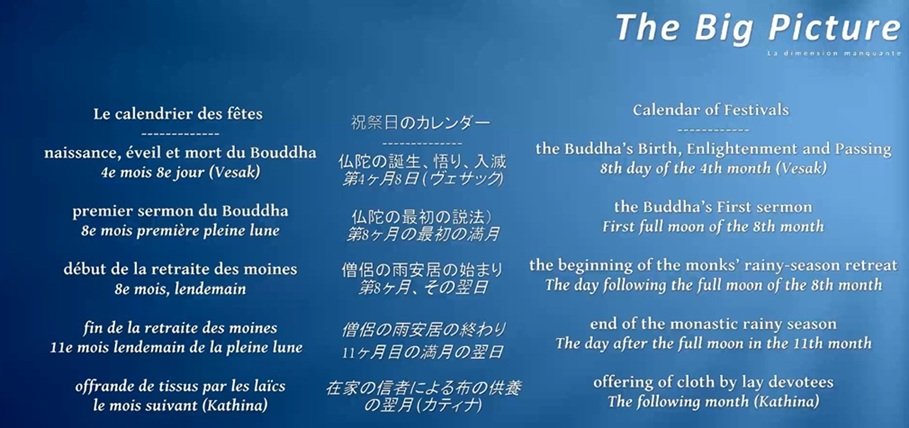
98§ Il éclate alors en sanglots qui retentissent dans tous les univers. Alerté, le Bouddha indique comment vaincre ces forces « karmiques » négatives par la « fête des plateaux de victuailles » : à la pleine lune du septième mois, alors que la communauté monastique sort de sa retraite annuelle et qu’elle est à son maximum de concentration spirituelle, les laïcs offriront aux moines des plateaux de victuailles en faveur de leurs ancêtres sur sept générations.
99§ Ce texte sacré a sans doute contribué à l’acclimatation du bouddhisme qui, sans cela, aurait sans doute été rejeté dans une société où le devoir de piété filiale est primordial et où les hommes sont censés fonder un foyer pour continuer la lignée.
4. Zoom sur le Vietnam
100§ Le Vietnam fait partie de l’Asie sinisée. Il s’est étendu vers le sud à partir de son berceau historique centré sur la ville de Hanoï, annexant des terres conquises sur les nations indianisées khmères et chams entre le XIIIe et le XVIIIe siècle.
101§ Le sol vietnamien connut deux guerres, l’une contre la France (1946-1954) et l’autre contre les États-Unis (1955-1975) qui provoqua la mort de plus de 58 000 Américains et plus d’un million et demi de Vietnamiens. C’est dans ce contexte de violence que le bonze Thích Quảng Đức s’immola par le feu le 11 juin 1963 à Saïgon, en signe de protestation contre Ngô Đình Diệm (1901-1963) , le président du Sud-Vietnam pro-américain qui menait une politique discriminatoire envers les bouddhistes. La photographie de son auto-immolation contribua au renversement et à l’assassinat du président sud-vietnamien.
102§ Le Vénérable Quảng Đức est honoré pour son sacrifice par le Parti communiste vietnamien, mais il n’en va pas de même pour les bonzes qui se sont immolés par le feu depuis 1975, date de la réunification du Vietnam : ces derniers protestaient contre les mesures gouvernementales contre l’association bouddhiste non officielle et leur mort, à supposer qu’elle soit relayée par les médias officielles, était expliquée par un « chagrin d’amour ».
5. L’auto-immolation par le feu
103§ Le geste d’auto-immolation du Vénérable Quảng Đức s’inscrivait dans une tradition longue où, à défaut de s’immoler entièrement, certains pratiquants se brûlaient un doigt en l’honneur du Bouddha [9].
104§ Le don du corps ou d’une partie du corps aux flammes figure dans le Sutra du Lotus [10] : il y a de cela un temps immémorial, le Bodhisattava Bhâichadjyarâdja s’était immolé par le feu après avoir ingéré pendant douze ans des huiles précieuses. Les Bouddhas des différents univers avaient alors approuvé ce sacrifice, plus grand que les offrandes matérielles ou le renoncement à la vie de famille.
105§ Dans son existence suivante, le même Bodhisattava a offert au feu son bras, recueillant là encore l’approbation du Bouddha Sakyamuni pour qui brûler un doigt de ses pieds ou de ses mains vaut plus que de renoncer à la royauté, à son épouse, à ses enfants.
© fr. Franck Guyen op, septembre 2026
English
This article is part of the following series : "The Big Picture - La grande image - Season 2"
YouTube Video : https://youtu.be/Ng1KbE0eUC4
If you appreciate the esperer-isshoni.fr website on the web : you can make a donation to the community in which I live (click here to find out how)
Introduction to the religious and spiritual traditions of Asia : Buddhism (4/8) [11]
Warning. A gesture that is by no means insignificant
This gesture of engagement with other religions is by no means insignificant, and we must be aware of the implications of such an encounter.
A religion is something important, if not essential, to its followers ; therefore, we must not behave like casual tourists by approaching it with simplistic and reductive ideas. Such an encounter calls for humility – I did not say humiliation.
I also believe that this act requires us to be clear about our own faith, about what we believe. Otherwise, we risk being bewildered by proposals offering a complete system of meaning, each with its own internal coherence, which are not necessarily compatible with one another. [12]
3. The Great Vehicle (Mahayana)
3. The Great Vehicle (Mahayana)
I. History of the Great Vehicle
77§ The Great Vehicle emerged in India shortly before the Christian era. It travelled along the Silk Roads to reach the Chinese cultural sphere, encompassing China, Korea, Vietnam and Japan.
78§ The barrier of the Indian language was overcome thanks to translators such as Kumarajiva (344– 413) and Amoghavajra (705–774). The early translators used Taoist terms before realising the specific nature of Buddhism. China also learnt to distinguish between the Way of the Ancients and the Great Vehicle, for which it ultimately opted.
79§ China has preserved the memory of the pilgrims Fa Xiang (337–422) and Xuang Tang (602–664), who returned laden with Buddhist texts. The former, having left China in 399, returned in 414 after reaching India via the Silk Road and returning by sea. The latter travelled exclusively by land on his pilgrimage from 629 to 645.
80§ The Mahayana considers that it has received the Buddha’s ultimate teaching, reserved for those who are most spiritually advanced. The Buddha Sakyamuni imparted it during the Second Turning of the Wheel of the Dharma on Vulture Peak (Gridhrakûta) near the city of Rajagriha. The Mahayana has preserved this teaching in what it calls the ‘ ‘extensive sutras’’, to distinguish them from the ‘sutras’ of the Way of the Ancients.
81§ According to the Sutra of the Lotus of the Sublime Dharma (abbreviated to the Lotus Sutra), one of these ‘extensive sutras’, followers of the Way of the Ancients chose to leave the assembly rather than listen to a new exposition of the Dharma that called the Three Baskets into question.
82§ Drawing on teachings it considers superior, the Mahayana pejoratively refers to the Way of the Ancients as the ‘Hinayana’. It calls itself the ‘Mahayana’ because it is said to propose an ideal more concerned with the salvation of others [13], particularly laypeople who would no longer need to become monks to be saved [14] .
83§ The various schools of the Mahayana emphasise their own ‘extended sutras’ associated with specific Buddhas, such as Sakyamuni, but also Amitabha and Vairocana. In addition to the Lotus Sutra already mentioned, we might cite the Three Pure Land Sutras (of Amitabha Buddha).
84§ The Chinese Buddhist canon has grown over the centuries to form a substantial library : the standard Japanese compilation, the Taishō zō, produced between 1924 and 1935, comprises one hundred volumes containing 2,920 works, totalling 80,645 pages.
1. A distinctly Chinese Buddhist school
85§ The introduction of Buddhism gave rise to a distinctly Chinese school, Chan, better known by its Japanese name, Zen [15].
87§ The Zen tradition gave rise to three schools :
- the Sôto school, which emphasises seated meditation ;
- the Rinzai school, which also uses ‘koans’, that is to say, unsolvable riddles [16]
- the Ôbaku school, which incorporates devotion to Amida Buddha.
2. Towards a devotional Buddhism : the Pure Land school of Amida Buddha
88§ The Pure Land school developed and transformed a Mahayana practice known as the ‘commemoration of the Buddha’.
89§ Originally, commemoration was understood as the mental visualisation of Amida Buddha and the environment known as the ‘Pure Land’ that he manifests around himself. The Pure Land School transformed this mental commemoration into a vocal practice based on the sacred invocation (mantra) : ‘Homage to Amida Buddha’.
90§ The Pure Land school became popular in Japan thanks to two great Japanese thinkers, Hōnen (1133–1212) and Shinran (1173–1262) . Even today, the Pure Land movements constitute the most significant Buddhist tradition in Japan.
91§ One might wonder why the same term, ‘commemoration of the Buddha’, which originally referred to a meditative practice, has become a vocal practice. We personally see this as a consequence of the concept of the ‘End of the Dharma’ : the efficacy of the Buddha’s Dharma diminishes over time, meaning that at a certain point the practice of the Buddha’s teachings can no longer bring about liberation, however hard the practitioner may strive.
92§ However, Hōnen believed, along with many of his contemporaries, that the ‘End of the Dharma’ had begun. Hōnen therefore wondered how to attain liberation. He found the answer in the teachings of the Chinese monk Shandao (613–681) , who promoted devotion to Amida Buddha : Amida would take hold of his devotees and would not let them go until he had reborn them in his Pure Land.
93§ This devotion was expressed through the practitioner’s invocation, which relied on the power of Amida Buddha’s vow to save all beings, rather than on their own efforts [17].
3. The Buddhist calendar in Sinicised Asia : the importance of the deceased
94§ The Mahayana celebrates three of the four great events in the life of Shakyamuni Buddha : his birth in the fourth lunar month, his Enlightenment and his first sermon in the twelfth lunar month.
95§ The calendar includes festivals linked to the deceased, whether they have become ancestors or, died unexpectedly, are unable to leave the world of the living, in which they wander in the form of ghosts or malevolent spirits.
96§ Three major festivals are associated with the deceased : the festivals surrounding the autumn and spring, as well as a festival dedicated to wandering souls during the full moon of the seventh lunar month. These days are reputed to be particularly favourable for communicating with the dead.
97§ The festival of wandering souls refers to the sacred text of the ‘Festival of the Platters of Food’. In this text, one of the great disciples of the Buddha Sakyamuni, Maudgalyayana, discovers through his supernatural powers that his mother has become a hungry ghost. He magically conjures up a bowl of rice before her, but alas, the grains of rice turn into burning coals the moment she brings them to her mouth. Despite the power of his supernatural abilities, Maudgalyayana was unable to overcome the consequences of his mother’s evil deeds.
98§ He then bursts into sobs that echo throughout all the universes. Alerted to this, the Buddha explains how to overcome these negative negative ‘karmic’ forces through the ‘festival of food trays’ : on the full moon of the seventh month, when the monastic community emerges from its annual retreat and is at the height of its spiritual concentration, laypeople will offer the monks trays of food in honour of their ancestors spanning seven generations.
99§ This sacred text has undoubtedly contributed to the acceptance of Buddhism, which, without this, would likely have been rejected in a society where the duty of filial piety is paramount and where men are expected to start a family to continue the family line.
4. Focus on Vietnam
100§ Vietnam forms part of Sinicised Asia. It expanded southwards from its historical heartland centred on the city of Hanoi, annexing lands conquered from the Indianised Khmer and Cham nations between the 13th and 18th centuries.
101§ Vietnamese soil witnessed two wars, one against France (1946–1954) and the other against the United States (1955–1975), which resulted in the deaths of more than 58,000 Americans and over one and a half million Vietnamese. It it was against this backdrop of violence that the monk Thích Quảng Đức set himself alight on 11 June 1963 in Saigon, in protest against Ngô Đình Diệm (1901–1963) , the pro-American president of South Vietnam who pursued a policy of discrimination against Buddhists. The photograph of his self-immolation contributed to the overthrow and assassination of the South Vietnamese president.
102§ The Venerable Quảng Đức is honoured for his sacrifice by the Vietnamese Communist Party, but the the same can be said of the monks who have set themselves alight since 1975, the year of Vietnam’s reunification : they were protesting against government measures targeting the unofficial Buddhist association, and their deaths—assuming they were reported by the official media—were attributed to ‘heartbreak’.
5. Self-immolation by fire
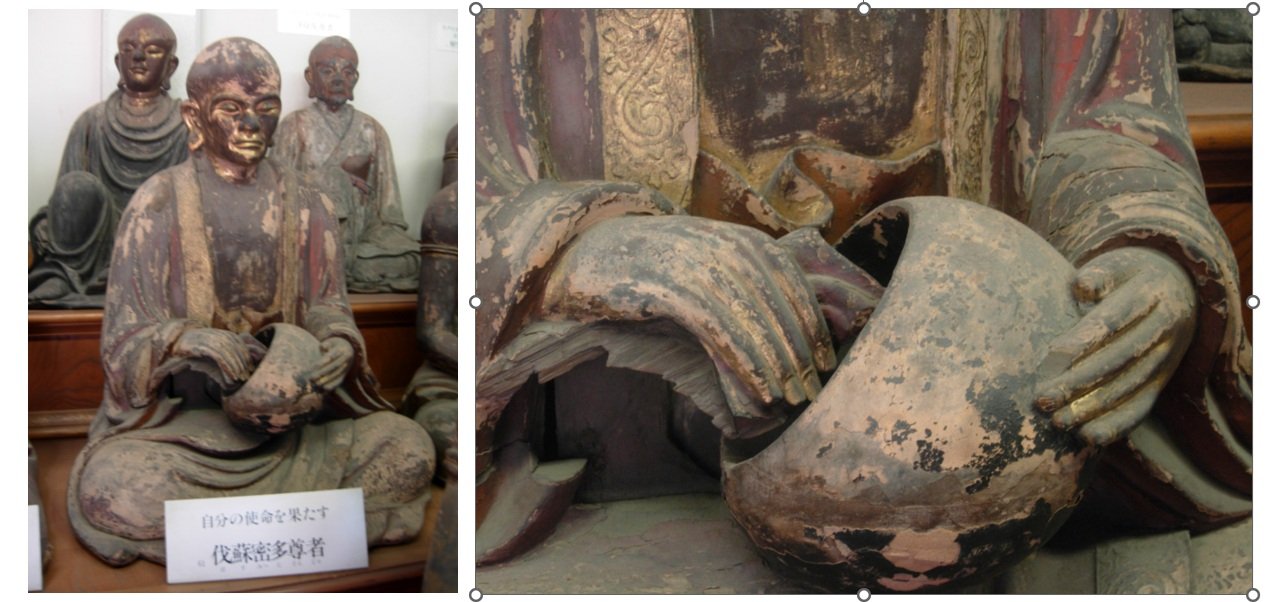
103§ The Venerable Quảng Đức’s act of self-immolation was part of a long-standing tradition in which, rather than setting themselves alight entirely, some practitioners would burn a finger in honour of the Buddha [18].
104§ The offering of the body or a part of the body to the flames is described in the Lotus Sutra [19] : in time immemorial, the Bodhisattva Bhâichadjyarâd ja immolated himself by fire after having ingested precious oils for twelve years. The Buddhas of the various universes then approved of this sacrifice, which was greater than material offerings or the renunciation of family life.
105§ In his next life, the same Bodhisattva offered his arm to the flames, once again earning the approval of the Buddha Sakyamuni, for whom burning a toe or a finger is worth more than renouncing kingship, one’s wife and one’s children.
© Franck Guyen op, February 2022
© fr. Franck Guyen op, September 2026
日本語
この記事は以下のシリーズの一部です : "The Big Picture - La grande image - シーズン2"
YouTube Video : https://youtu.be/Ng1KbE0eUC4
もしウェブ上の esperer-isshoni.fr というウェブサイトを気に入ってくれたなら、私が暮らすコミュニティへ寄付をすることができる([寄付方法はこちら→https://dominicainslille.fr/?page_id=84])
アジアの宗教・精神伝統入門 - 仏教 (4/8) [20]
警告。。決して些細ではない姿勢
他の宗教と関わるというこの姿勢は決して些細なものではなく、我々はそうした出会いがもたらす意味合いを認識しなければならない。
宗教とは、信者にとって不可欠とまではいかなくとも重要なものである。したがって、単純化され、矮小化された考えでそれに接し、まるで気ままな観光客のように振る舞ってはならない。そのような出会いに求められるのは謙虚さだ――屈辱ではない。
また、この行為には、私たち自身の信仰、すなわち私たちが何を信じているのかについて、明確にしておくことが求められると私は考える。そうでなければ、それぞれ独自の内部的整合性を持ち、必ずしも互いに両立するとは限らない、完全な意味体系を提示する提案に、私たちは戸惑ってしまう危険がある。 [21]
3. 大乗(マハーヤーナ)
I. 大乗の歴史
77§ 大乗はキリスト紀元直前にインドで出現した。シルクロードを経て、中国、韓国、ベトナム、日本を含む中国の文化圏へと広まっていった。
78§ クマラジーヴァ(344–413)やアモガヴァジュラ(705–774)といった翻訳者たちのおかげで、インド語という障壁は克服された。初期の翻訳者たちは、仏教の特質を認識するまでは、道教の用語を用いていた。中国ではまた、「古道の教え」と「大乗」を区別する方法を学び、最終的には後者を選択することとなった。
79§ 中国では、仏教経典を大量に持ち帰った巡礼者、法祥(337–422)と玄奘(602–664)の記憶が今に伝えられている。前者は399年に中国を出発し、シルクロードを経由してインドに到達した後、海路で帰国し、414年に中国に戻った。後者は629年から645年にかけて、陸路のみを用いて巡礼の旅を行った。
80§ 大乗仏教は、精神的に最も進んだ者たちのために留保された、仏の究極の教えを受け継いだと考えている。釈尊は、ラージャグリハの街近郊にある鷲峰(グリドラクータ)において、第二の法輪転回(ダルマの車輪の第二の回転)の際にこの教えを説いた。大乗仏教は、この教えを「『広経』」と呼ばれるものとして保存しており、これは「古道」の『経』と区別するためである。
81§ これらの「広経」の一つである『妙法蓮華経』(略して『法華経』)によると、古の道の信者たちは、三蔵を疑問視する新たな法説を聞くよりは、むしろ集会を去ることを選んだという。
82§ 大乗仏教は、自らがより優れていると考える教えに基づき、古の道を蔑称として「小乗」と呼んでいる。大乗仏教が自らを「大乗」と呼ぶのは、他者の救済をより重視する理想を提唱していると言われるからである [22]とされ、特に、救われるために僧侶になる必要がなくなる在家の者たちを対象としている [23]。
83§ 大乗仏教の諸宗派は、釈迦牟尼仏をはじめ、阿弥陀仏や毘盧遮那仏といった特定の仏に関連する独自の「長経」を重視している。すでに言及した『法華経』に加え、『三浄土経』(阿弥陀仏に関する)を挙げることができる。
84§ 中国の仏教経典は、数世紀にわたって増補され、膨大な蔵書を形成してきた。日本の標準的な叢書である大正蔵は、1924年から1935年にかけて編纂され、100巻、2,920点、計80,645ページから成っている。
1. 独自の中国仏教宗派
85§ 仏教の伝来により、独自の中国仏教宗派、禅(日本語名「禅」としてよりよく知られている)が生まれた [24]。
87§ 禅の伝統からは、3つの宗派が生まれた:
- 曹洞宗:座禅を重視する宗派;
- 臨済宗:『公案』、すなわち解きようのない謎も用いる宗派[ [解けない謎の例:「両手を叩く音は誰もが知っている。では、片手ではどんな音がするだろうか?」この公案は、日本の禅僧・白隠(1686–1769)によって考案されたものである]]
- 大白宗:阿弥陀仏への信仰を取り入れている。
2. 信仰仏教への道:阿弥陀仏の浄土宗
88§ 浄土宗は、「念仏」として知られる大乗仏教の修行を発展させ、変容させた。
89§ もともと、「念仏」とは、阿弥陀仏と、その周囲に顕現される「浄土」と呼ばれる環境を心の中で観想することを指していた。浄土宗は、この心の念仏を、聖なる唱名(マントラ)「南無阿弥陀仏」に基づく声に出して唱える修行へと変容させた。
90§ 浄土宗は、日本の二人の偉大な思想家、法然 (1133–1212) と親鸞 (1173–1262) のおかげで、日本で広く普及した。今日でも、浄土宗は日本で最も重要な仏教の伝統を構成している。
91§ もともと瞑想の修行を指していた「仏を念じる」という同じ用語が、なぜ声に出して唱える修行になったのか、不思議に思う人もいるかもしれない。私見では、これは「法滅」という概念の結果であると考える。すなわち、仏法の効力は時とともに衰え、ある時点に達すると、修行者がどれほど懸命に努力しようとも、仏の教えに基づく修行ではもはや解脱をもたらすことができなくなるということである。
92§ しかし、法然は、同時代の多くの人々と同様に、「法滅」がすでに始まっていると信じていました。そこで法然は、いかにして解脱を得られるかを模索した。彼は、中国の高僧・善導(613–681)の教えの中にその答えを見出した。善導は阿弥陀仏への信仰を説き、阿弥陀仏は信者をしっかりと抱きしめ、浄土へ往生させるまで決して手放さないとしたのである。
93§ この信仰は、修行者による念仏を通じて表現された。それは、自らの努力ではなく、一切の衆生を救うという阿弥陀仏の誓願の力に依拠するものであった [25]
3. 中国化されたアジアにおける仏教暦:死者の重要性
94§ 大乗仏教では、釈迦牟尼仏の生涯における四大事件のうち、旧暦4月の誕生、旧暦12月の悟り、および旧暦12月の初説法の三つを祝う。
95§ この暦には、故人に関連する祭事が含まれている。故人が先祖となっている場合もあれば、不慮の死を遂げたために現世を離れられず、幽霊や悪霊となってさまよっている場合もある。
96§ 故人に関連する主要な祭りは3つある。秋と春に行われる祭り、そして旧暦7月の満月の日に、さまよう魂に捧げられる祭りである。これらの日は、死者と交信するのに特に適しているとされている。
97§ 飢餓鬼の祭りは、聖典『食器祭』に言及されている。この経典の中で、釈尊の偉大な弟子の一人である目犍連(モウガリアヤーナ)は、自身の超自然的な力によって、母親が飢餓鬼になっていることを知る。彼は魔法のように彼女の前に一碗のご飯を出したが、悲しいかな、彼女がそれを口に運ぶやいなや、米粒は燃え盛る炭へと変わってしまった。超自然的な能力の力にもかかわらず、マウドガライヤーナは母の悪行がもたらした結果を覆すことはできなかった。
98§ その後、彼は号泣し、その泣き声はすべての宇宙に響き渡った。これに気づいた仏陀は、「供餉の祭」を通じて、こうした負の「業」の力を克服する方法を説いた。すなわち、第七月の満月の日、僧団が年間の安居を終え、精神的な集中力が最高潮に達している時に、在家信者は七代にわたる先祖を称えて、僧侶たちに食事の供え物を捧げるのである。
99§ この聖典は、間違いなく仏教の受容に寄与した。もしこれがなければ、親孝行の義務が最優先され、男性が家系を継ぐために家庭を築くことが期待される社会において、仏教はおそらく拒絶されていただろう。
4. ベトナムに焦点を当てる
100§ ベトナムは、中国文化の影響を受けたアジアの一部を成している。同国は、ハノイ市を中心とする歴史的な中心地から南へと拡大し、13世紀から18世紀にかけて、インド文化の影響を受けたクメールやチャム諸国から征服した土地を併合した。
101§ ベトナムの地では、フランスとの戦争(1946年~1954年)と米国との戦争(1955年~1975年)という2つの戦争が繰り広げられ、その結果、5万8,000人以上の米国人と150万人以上のベトナム人が命を落とした。こうした暴力の渦中、1963年6月11日、サイゴンで僧侶のティク・クアン・ドゥックが、仏教徒に対する差別政策を推進した親米派の南ベトナム大統領、ゴ・ディン・ディエム (1901–1963) に抗議して焼身自殺を図った。彼の焼身自殺を捉えた写真は、南ベトナム大統領の失脚と暗殺の一因となった。
102§ クアン・ドゥック師の犠牲はベトナム共産党によって称えられているが、1975年のベトナム再統一以降、自らに火を放った僧侶たちについても同様のことが言える。彼らは非公認の仏教団体を標的とした政府の措置に抗議していたが、彼らの死は――もし公式メディアで報じられたとすれば――「心痛」によるものとされた。
5. 焼身自殺
103§ クアン・ドゥック尊者の焼身自殺は、長きにわたる伝統の一環であった。その伝統では、全身に火をつけるのではなく、仏を称えるために指を焼く修行者もいた [26].
104§ 身体または身体の一部を炎に捧げる行為は、『法華経』 [27]:太古の昔、菩薩 バイチャジャラード・ジャは、12年間にわたって貴重な油を摂取した後、火によって自らを焼いて犠牲となった。その後、諸世界の諸仏はこの犠牲を称賛した。それは、物質的な供物や家庭生活の放棄よりも偉大なものであった。
105§ 来世において、この同じ 菩薩 は自らの腕を炎に捧げ、再び釈迦牟尼仏の称賛を得た。釈迦牟尼仏にとって、足の指や指一本を焼くことは、王位や妻、子供たちを捨てることよりも価値があるからである。
© フランク・ギエン op、2022年2月
© フランク・ギエン op、2026年9月
[1] Les articles synthétisent un cours de 24h dispensé sur un an à la Faculté de théologie de Lille. Nous avons assuré ce cours de 2010 à 2023
[3] D’après le Grand Véhicule, le « Petit Véhicule » proposerait l’idéal d’un « Bouddha solitaire » qui réalise l’Éveil sans l’enseigner aux autres
[4] Voir en particulier le « sutra développé » dédié au laïc Vimalakirti qui en remontre aux plus grands disciples du Bouddha
[5] Nous utiliserons dorénavant le vocable « zen » plus usité en Occident que « chan »
[6] Suite à cette persécution, la plupart des autres écoles bouddhistes ont disparu de Chine. Elles continuent cependant d’exister au Japon où elles s’étaient implantées avant la persécution
[7] Exemple d’énigme insoluble : « Tout le monde sait le bruit que font deux mains frappées ensemble. Quel est le bruit fait par une main ? ». Ce koan, ce cas d’école a été inventé par le moine zen japonais Hakuin (1686-1769)
[8] Shinran, le disciple d’Hônen, disait qu’à la fin de la Loi, il faut attendre le salut non pas de ses propres forces mais des forces d’un Autre.
[9] Mon grand-père vietnamien a assisté à l’auto-crémation d’un moine bouddhiste avant les guerres d’Indochine. Confucéen peu favorable aux moines bouddhistes, il rapportait que le moine accélérait sa récitation des sutras au fur et à mesure que les flammes progressaient
[10] Voir le chapitre 22 dans la version sanskrite, chapitre 23 dans la version chinoise du Sutra du Lotus
[11] These articles summarise a 24-hour course taught over the course of a year at the Faculty of Theology in Lille. We have been teaching this course for around ten years.
[12] View the text Engaging with Asian religions : my statement of intent
[13] According to the Mahayana, the ‘Hinayana’ proposes the ideal of a ‘ ‘solitary Buddha’ who attains Enlightenment without teaching it to others
[14] See in particular the ‘extended sutra’ dedicated to the layperson Vimalakirti, who puts the Buddha’s greatest disciples in their place
[15] From now on, we shall use the term ‘Zen’, which is more commonly used in the West than ‘Chan’] ]. According to sinologists, it is said to contain Taoist influences. This school is believed to have been introduced by the Indian patriarch Bodhidharma in the fifth century AD.
86§ Unlike other schools, Zen required its monks to work according to the maxim attributed to the Zen monk Baizhang (720–814) : ‘ A day without work is a day without food”. Zen monasteries thus became less dependent on donations from laypeople, which undoubtedly helped them to survive the great persecution of 845, unleashed by the Tang Emperor Wuzong against Buddhism as well as other foreign religions, such as Nestorian Christianity and Persian Zoroastrianism[ [Following this persecution, most other Buddhist schools disappeared from China. They continue, however, to to exist in Japan, where they had taken root before the persecution
[16] Example of an unsolvable riddle : ‘Everyone knows the sound made by two hands clapping together. What sound does one hand make ?’ This koan, this koan was devised by the Japanese Zen monk Hakuin (1686–1769)
[17] Shinran, Hōnen’s disciple, said that at the end of the Dharma, one must await salvation not through one’s own efforts but through the power of Another.
[18] My Vietnamese grandfather witnessed the self-immolation of a Buddhist monk before the Indochina Wars. A Confucian who was not particularly favourably disposed towards Buddhist monks, he reported that the monk sped up his recitation of the sutras as the flames spread
[19] See chapter 22 in the Sanskrit version, chapter 23 in the Chinese version of the Lotus Sutra
[20] これらの記事は、リールの神学部で1年間にわたり開講された24時間の講座をまとめたものである。当講座は約10年にわたり開講されている。
[21] アジアの宗教との関わり:私の意向表明 を見る]
[22] 大乗仏教によれば、「小乗」は、他者に教えを説くことなく悟りを開く「 『独覚仏』という理想を提唱している
[23] 特に、仏の偉大な弟子たちをその立場に追いやる在家のヴィマラキルティに捧げられた『長経』を参照
[24] 以下、西洋では「Chan」よりも「Zen」という用語が一般的に使用されているため、本稿では「Zen」という用語を用いる] ]. 中国学者の説によれば、禅には道教の影響が見られるという。この宗派は、西暦5世紀にインドの祖師、菩提達磨によって伝来したと考えられている。
86§ 他の宗派とは異なり、禅では、禅僧・百丈(720–814)に帰せられる「働かざる日は食うべからず」という格言に従って、僧侶に労働を義務づけていた。そのため、禅の寺院は一般信者からの寄付への依存度を低減させることができ、これは間違いなく、唐の武宗が仏教や、ネストリウス派キリスト教、ペルシャのゾロアスター教といった他の外来宗教に対して845年に繰り広げた大規模な迫害を乗り切る上で役立った[ [この迫害の後、他のほとんどの仏教宗派は中国から姿を消した。しかし、迫害以前にすでに根を下ろしていた日本では、それらの宗派は現在も存続している
[25] 法然(法然)は、法末の時代には、自らの努力ではなく、他者の力によって救いを待たなければならないと述べた。
[26] 私のベトナム人の祖父は、インドシナ戦争以前に、ある仏教僧の焼身自殺を目撃していた。仏教の僧侶に対して特に好意的ではなかったその儒学者によると、炎が広がるにつれて、その僧侶は経文の読誦を速めたという
[27] 『法華経』のサンスクリット語版第22章、中国語版第23章を参照
Portfolio